Free Moving Quote - Call Now: (03) 9636 3299

Moving Between Melbourne Suburbs: Tips for Narrow Streets, Parking, and Stairs

To move between Melbourne suburbs without stress, plan for three things early: truck access on narrow streets, legal parking near both addresses, and the stairs or lifts inside each building. Share these details with your removalists before moving day, because they affect time, crew size, and cost more than the distance does.

Melbourne is full of character: Victorian terraces in Fitzroy and Carlton, tight laneways in Richmond, and apartment blocks in South Yarra and St Kilda. These are lovely places to live, but they are not always easy to move in or out of. Here is how to handle the three biggest challenges.

1. Moving on Narrow Streets

Many inner-suburb streets are narrow, lined with parked cars, or one-way. A full-size removal truck may not fit, or may have to park further away than you expect.

What to do:

  • Tell your removalists about the street. Mention if it is narrow, a dead end, one-way, or has overhead tree branches or tram lines nearby.
  • Ask about truck size. A smaller truck with two trips can sometimes be easier than one large truck that cannot get close.
  • Check the walking distance. The longer the carry from truck to door, the more time the move takes.
  • Have a free video assessment. Showing the street and entry points on video helps the crew arrive with the right equipment and gives you a more accurate quote.
  • Move early. Streets are usually clearer before 9 am, especially on weekends.

2. Parking: How to Secure Space for the Truck

Parking is often the most overlooked part of a suburb-to-suburb move. If the truck cannot stop close to the entrance, loading slows down, and costs rise.

What to do:

  • Check local council rules. Many councils have time limits, permit zones or clearway restrictions. Contact your council to ask whether a temporary parking permit or signage is available.
  • Reserve the space. Place cones or bins out the night before, where it is legal to do so, and let neighbours know.
  • Check both addresses. Your new suburb may have different restrictions to your old one.
  • Share building rules. Apartment buildings may have loading dock hours, lift bookings or basement height limits. Book these in advance.

3. Stairs, Lifts and Tight Entrances

Stairs are one of the main factors that affect moving time. Narrow hallways, tight staircases and small lifts all need extra planning.

What to do:

  • Measure large items. Check sofas, wardrobes, fridges and beds against doorways, hallways and staircases. If an item will not fit, tell your movers before the day.
  • Plan for dismantling. Beds, tables and wardrobes can often be taken apart and reassembled at the new place, which makes stairs far easier.
  • Book the lift. In apartment buildings, reserve the service lift and ask about protective padding requirements.
  • Declutter first. Moving fewer items means fewer stair trips and a lower final cost.
  • Pack smart. Use medium-sized boxes that are easy to carry on stairs, and avoid overloading them.

Why Choosing the Right Team Matters

Tricky access, limited parking, and multiple flights of stairs make an experienced crew worth more than a low price alone. Look for a team that:

  • Is directly employed rather than subcontracted
  • Is fully insured, with public liability and transit cover
  • Protects furniture with heavy-duty blankets and shrink wrap
  • Knows local streets, buildings and parking conditions

If you want Affordable Removalists Melbourne without surprise costs on the day, give your movers full access details upfront. That way the quote reflects the real job, and nothing changes when the truck arrives.

Move On Removals has been moving Melbourne households since 2012, with over 45,000 moves completed. The team is company-employed, fully insured, and familiar with inner-suburb access challenges. A team of experienced removalists in Melbourne can look at a narrow street or a third-floor walk-up and plan around it before moving day.

Quick Moving Day Checklist

  • Book your removalists 2 to 4 weeks ahead
  • Share photos or a video of both addresses
  • Confirm truck access and parking at both ends
  • Reserve lifts and loading docks in apartment buildings
  • Measure large furniture
  • Dismantle what you can in advance
  • Label boxes by room
  • Keep essentials (documents, chargers, medication) with you

Frequently Asked Questions

How do I move furniture up narrow stairs in Melbourne?
Measure the item and the stairwell first. Dismantle where possible, wrap the furniture for protection, and tell your movers about the stairs in advance so they bring the right crew and equipment.

Do I need a parking permit for a removal truck in Melbourne?
It depends on your council and street. Many areas have time limits or restrictions, so check with your local council before moving day and ask whether temporary parking signage or permits are available.

Does the number of stairs affect moving costs?
Yes. Stairs, walking distance from truck to door, parking availability, heavy items, and the total volume of belongings can all affect the final price.

What if the removal truck cannot fit on my street?
Your movers may use a smaller truck, park nearby and carry items further, or make multiple trips. Letting them know early allows them to plan the best option.

Can removalists dismantle and reassemble furniture?
Yes, professional removalists can dismantle beds, tables and wardrobes before the move and reassemble them at your new home.

How far in advance should I book?
Book 2 to 4 weeks ahead, especially for weekends and end-of-month dates. For last-minute moves, call and ask about availability.

Are the movers insured?
At Move On Removals, every move is covered by public liability and transit insurance, and all movers are company-employed.

Conclusion

Moving between Melbourne suburbs does not have to be difficult. With a little planning for narrow streets, parking and stairs, plus clear communication with your movers, you can avoid delays and extra costs on the day. If you want a team that understands local access challenges, hire Experienced Removalists Melbourne and get a free quote today.

Contact Move On Removals on (03) 9636 3299 for your free quote.
How to Prepare Your Furniture for Removalists Before Moving Day

If you’re going to be moving in the near future, the best way to minimise the stress of your move is to prepare ahead of time and hire professional furniture removalists Melbourne. 

Heavy furniture can be difficult to move, and without proper packing of your items, it’s easy for your belongings to get scratched or damaged. When you prepare correctly and have professionals help you, you can ensure your furniture arrives at your new property safely and in perfect condition.

In this guide, we will provide you with simple and effective ways to prep your furniture for removalists before moving day. Let’s get started!

Key Takeaways

  • Make sure to plan ahead of time. Start planning at least two weeks before you are moving.
  • Disassemble large pieces of furniture for safety and to conserve space.
  • Use good packing materials such as bubble wrap and wool blankets.
  • Label everything clearly for faster unpacking.
  • Hire professional movers to help with heavy or valuable pieces.

Why Preparing Your Furniture Matters Before Moving Day

Even the best furniture removalists in Melbourne can only work efficiently if the furniture is prepared beforehand. Well-prepared furniture:

  • Helps save time on loading and unloading.
  • It helps protect against scratches, dents, and breakage.
  • It helps to lower overall moving costs.
  • It eases unpacking at your new place.

Proper planning makes all the difference. Whether you are packing furniture for moving across the street or down the street, preparation also helps avoid chaos on the big day. 

Step-by-Step Guide: How to Pack Furniture for Moving Safely

If you are thinking about how to pack furniture for moving, here is the answer. Packing furniture is not simply putting items in boxes. Furthermore, it includes protection, labelling and thoughtful disassembly. Here’s a simple plan to help you get started.

1. Create a Packing Plan

Before you lift a finger, plan your move.

  • Make a checklist of your furniture items.
  • Look for fragile or high-value items like glass tables or antiques.
  • And determine which items need disassembly.

A little planning can save you a lot of last-minute insanity on packing day.

2. Clean Everything Before You Pack

Wipe down every piece before packing furniture for moving. Dust, dirt, or grime can all create scratches and damage polished wood finishes while the furniture is being transported. Use only soft cleaning products for wood and fabric-safe sprays for upholstery. 

Pro Tip: Packing clean furniture makes it easier to unpack in your new home and looks much better.

3. Disassemble Large Items

Disassembly is essential when preparing large furniture for movers.

Remove table legs, headboards, and shelves to take up less space in their truck and avoid unforeseen damage.

You should also keep screws, bolts, and appropriate fittings in a labelled zip-lock bag and tape it to the corresponding piece of furniture so reassembly becomes faster and is not a massive headache.

4. Use Quality Packing Materials

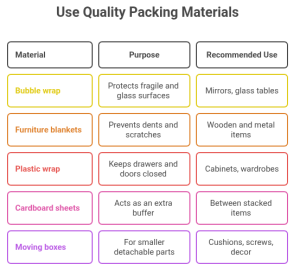
Investing in the right packing supplies is worth it. Here’s a quick reference table for materials and their uses:

Use Quality Packing Materials

Using professional-grade materials gives better protection than using old sheets or newspapers.

5. Protect Corners and Edges

Corners and edges are the first to become damaged. Wrap them with layers of bubble wrap, or wrap them with corner protectors. This became important when moving large furniture through tight doorways or stairs.

6. Secure Upholstered Furniture

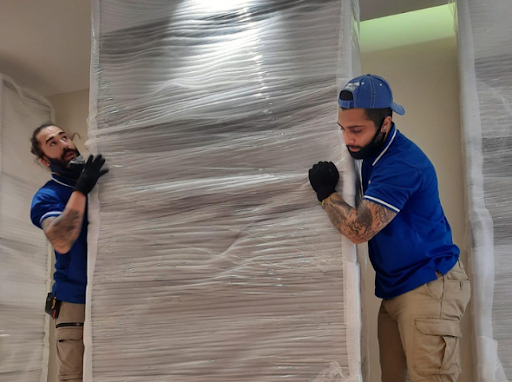
For sofas, chairs, or recliners, wrap them using plastic wrap or use furniture covers. It will protect the furniture fabric from dust and excessive moisture. If you have leather furniture, do not wrap it directly in plastic wrap or furniture covers; use a layer of cloth below the plastic to stop moisture from building up underneath the plastic.

7. Prepare Your Home for Moving Day

Make the path for the movers.

  • Remove any rugs or cords that may cause tripping hazards.
  • Keep doors open or use doorstops.
  • Designate a parking space for the moving truck near the entrance.

You’ll work together more efficiently and keep your furniture and property safe.

Expert Tips for Preparing Large Furniture for Movers

  • Before moving day, begin by measuring any doorways and hallways into which the items have to fit. This will guarantee that the items will easily fit through the space.
  • Use a combination of moving straps or dollies to avoid injury as well as damage to the item.
  • Professional removalists in Melbourne will not only have experience in shifting heavy items but also be trained to do so safely.
  • If you use any lifting or moving techniques, do not forget to place old towels or mats underneath the item to protect the floors from scratches.

Keep in mind that furniture can be expensive to replace, so protect your investment by being prepared.

Common Mistakes to Avoid While Packing Furniture for Moving

Even with preparation, a few minor mistakes will cause damage. Try to avoid the following mistakes:

  • Packing wet/damp furniture, as this will cause mould
  • Forgetting to label bags of screws and fittings
  • Skipping to use bubble wrap on glass surfaces
  • Overloading moving boxes with heavy items
  • Ignoring insurance on high-value furniture.

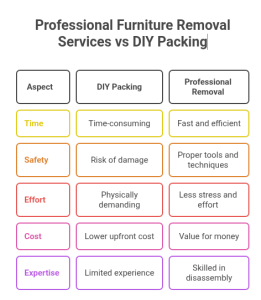
Professional Furniture Removal Services vs DIY Packing

Wondering if you should hire professionals or pack on your own? Here’s a quick comparison:

Professional Furniture Removal Services vs DIY Packing

How Early Should You Start Preparing Furniture for a Move?

If possible, plan to start at least two weeks before moving day. Begin with rarely used items, then move on to everyday furniture closer to the date. Early preparation ensures you have enough time to fix or replace anything before the move.

Don’t wait until the last minute. Plan, pack, and prepare your furniture like a professional. Your future self will thank you.

Prepare Smart, Move Smooth with Trusted Experts!

Properly preparing your furniture will help the moving day happen faster and easier, and less stressful. Whether it is disassembling with care or packing using smart techniques, furniture removalists in Melbourne can help you.

For those in Melbourne, Move On Removals provides reliable teams to safely and securely remove your furniture on time. Visit our website for trusted moving solutions that alleviate the stress of moving. Reach out now and let our team handle the heavy lifting for you.

FAQs

  1. When should I start getting my furniture ready before the movers show up?

 Ideally, you should start at least two weeks early to allow for a smooth and stress-free move.

  1. How do I keep wooden furniture safe when moving?

 It is always best to clean the furniture and then cover it securely with moving blankets, and avoid covering wood with plastic to prevent any moisture from being trapped.

  1. Will furniture removalists in Melbourne have packing supplies?

 Yes, many professional movers will supply packing supplies, including blankets, bubble wrap, and boxes as part of migrating your furniture.

  1. Should I disassemble my furniture before the movers show up?

 Yes, disassembling furniture will save time and help prevent damage. Keep the hardware needed for reassembly in labelled bags

  1. What items should I not pack with furniture?

Do not pack flammable, hazardous, or liquid items with your furniture because they can potentially leak and cause accidents during transport.

Click-To-CallFree Quote
Get started today★ 4.6 on Google

Request a free moving quote